History
From Paleolithic evidence to the industrial era of geothermal springs.
Located at an altitude of 410 meters, Lustignano preserves traces of settlements dating back to prehistory. The most significant artifact is a Paleolithic engraved pebble found in the 'Grotte ai Corvi', depicting a bison.
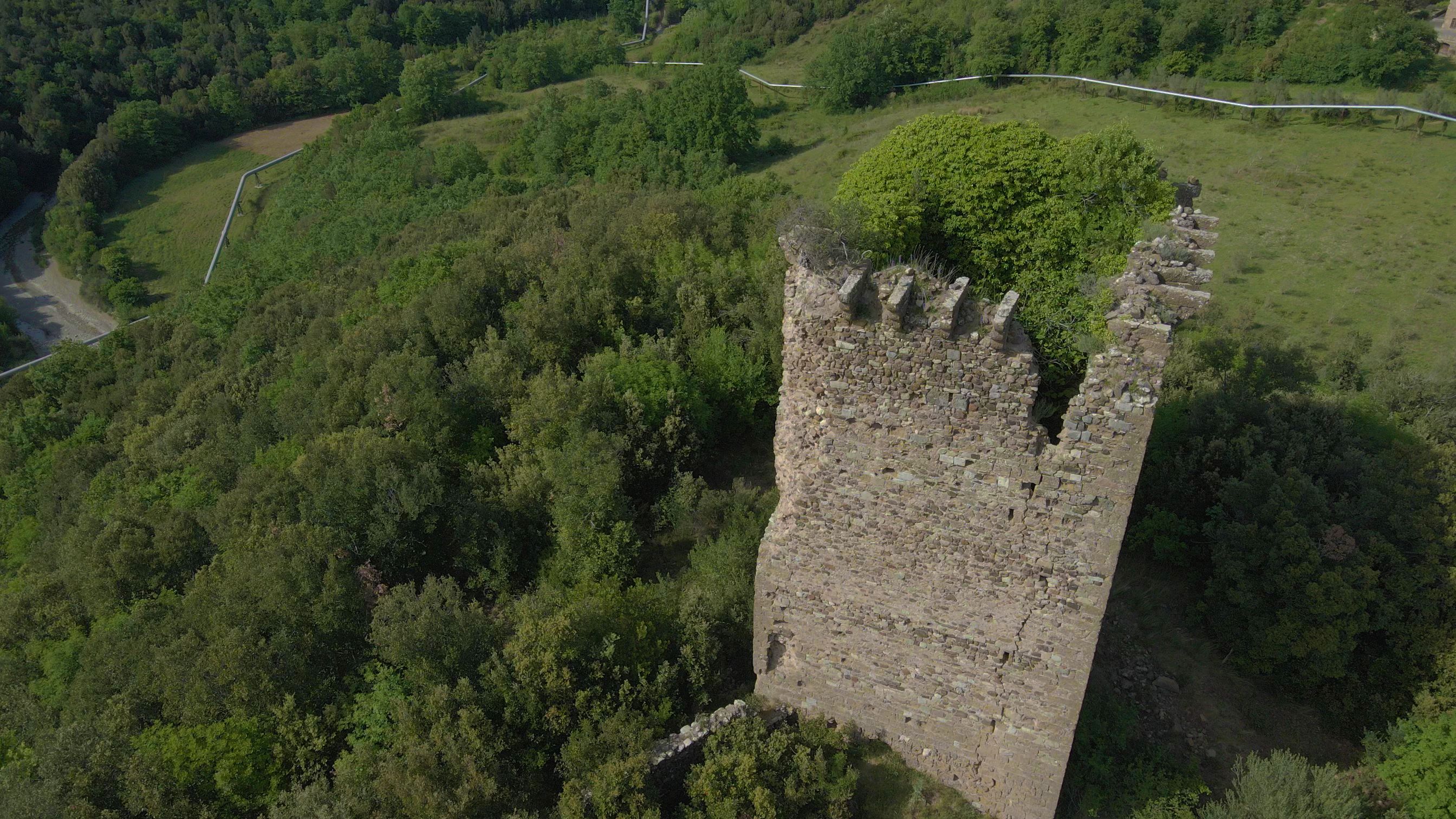
In Roman times, the site was known as Lussignano. During the Middle Ages, control of the territory passed to Volterra, which made it a strategic point along the Via Maremmana. From this period remains the Torraccia di Cornia, a fortification located at the confluence of the Cornia and Turbone rivers.
Since the 16th century, the local economy has been shaped by the Lagoni Rossi and boric acid extraction. The industrial development of the 19th century transformed the landscape with the introduction of geothermal vents and power plants.